
Toyota RAV4: Maintenance and care - Engine compartment
Components Toyota RAV4 hybrid
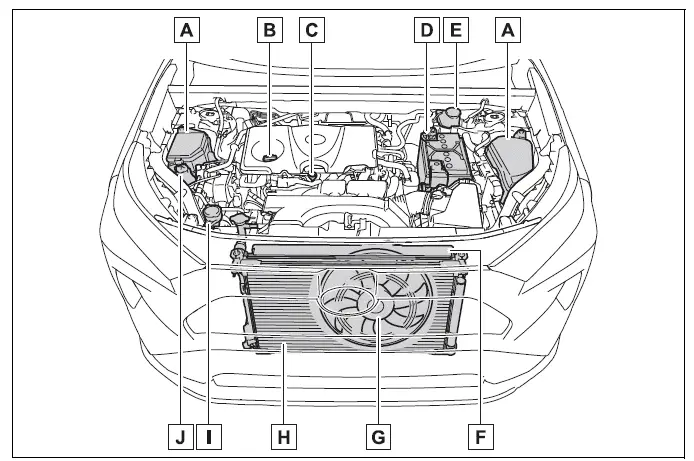
- Fuse boxes
- Engine oil filler cap
- Engine oil level dipstick
- Battery
- Brake fluid reservoir
- Radiator
- Electric cooling fan
- Condenser
- Washer fluid tank
- Engine coolant reservoir
Checking the engine oil
Check the engine oil level with the engine at normal operating temperature and switched off. Use the dipstick to confirm that the oil level is above the low-level mark.
1. Park the vehicle on firm, level ground. After warming the engine to operating temperature, turn it off and wait approximately 5 minutes. This waiting period allows the engine oil to drain back into the bottom of the engine so the dipstick can provide a more accurate reading.
2. Place a clean rag beneath the end of the dipstick, then pull the dipstick completely out of its tube. The rag will help prevent oil from dripping onto surrounding engine components.
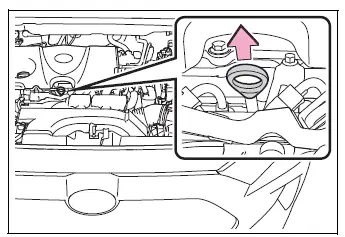
3. Wipe all oil from the dipstick with a clean, lint-free rag so that the level markings can be read clearly.
4. Reinsert the dipstick fully into its tube. Make sure it reaches its normal seated position before removing it again.
5. Hold a rag beneath the end of the dipstick, pull it out once more, and inspect the oil mark. Confirm that the oil level is above the low-level mark.
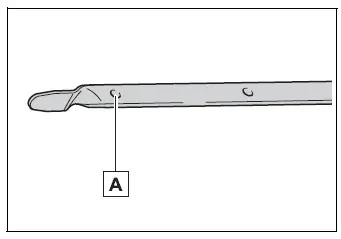
- Low-level mark
The shape, length, and appearance of the dipstick may vary depending on the vehicle specification or engine type. Always identify the applicable level mark on the dipstick installed in your vehicle.
6. After completing the inspection, wipe the dipstick clean and insert it fully into the dipstick tube. Confirm that it is properly seated before closing the hood.
NOTICE
■ To prevent serious engine damage
Inspect the engine oil level regularly. Operating the engine with an insufficient amount of oil can cause severe internal wear or damage.
■ Engine oil consumption
A certain amount of engine oil is consumed during normal vehicle operation. Under the conditions listed below, oil consumption may increase and additional oil may be required between scheduled oil maintenance intervals. Check the level more frequently when the Toyota RAV4 is operated under demanding conditions.
- When the engine is new, such as shortly after purchasing the vehicle or after the engine has been replaced, internal components may consume more oil while they settle into normal operation.
- If low-quality engine oil is used, or if the oil does not have the appropriate viscosity for the vehicle and operating conditions.
- When driving at high engine speeds, carrying a heavy load, towing, or repeatedly accelerating and decelerating, as these conditions place greater demand on the engine.
- When the engine is left idling for an extended period or the vehicle is frequently driven in heavy traffic with repeated low-speed operation.
■ Engine oil level rise
If the vehicle is repeatedly driven before the engine reaches normal operating temperature, moisture produced by condensation inside the engine or a small amount of unburned fuel may mix with the engine oil. This can cause the indicated oil level to rise even though additional oil has not been added. This condition by itself does not necessarily indicate a malfunction.
The engine may take longer to warm up fully under the following operating conditions:
- When the vehicle is used mainly for short-distance trips that end before the engine reaches its normal temperature.
- When driving for extended periods at low speeds.
- When the outside temperature is low and the engine warms more slowly than under moderate conditions.
When checking the engine oil, first make sure that the engine has reached normal operating temperature and follow the specified waiting procedure. If the oil level is above the refill upper-limit mark, contact a Toyota dealer for inspection and professional advice.
Adding engine oil Toyota RAV4 XA50
■ Checking the oil type and preparing the required items
Before adding engine oil to the Toyota RAV4, confirm the specified oil type and gather all necessary items. Using the correct oil and preparing the work area in advance helps prevent contamination, spills, and accidental overfilling.
- Engine oil of the specified type
- Oil quantity required to raise the level from the low-level mark to the refill upper-limit mark:

1.6 qt. (1.5 L, 1.3 Imp. qt.)
- Required item
Clean funnel
■ Adding engine oil
If the oil level is at or near the low-level mark, add engine oil of the same type as the oil already in the engine. Add only a small amount at a time so the level can be checked accurately.
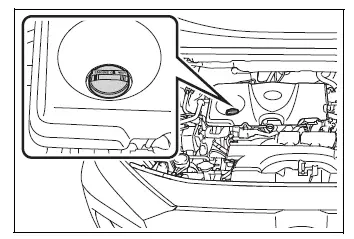
1. Turn the engine oil filler cap counterclockwise and remove it. Place the cap in a clean location where dirt or debris cannot collect on its sealing surface.
2. Using a clean funnel, pour the engine oil in slowly and check the level repeatedly with the dipstick.
Make sure the oil remains between the low-level mark and the refill upper-limit mark. Do not add the full estimated quantity without checking the dipstick, as the amount required depends on the existing oil level.
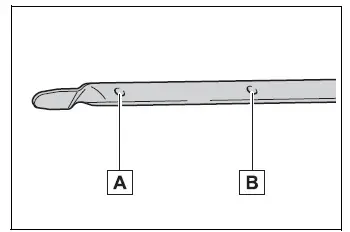
- Low-level mark
- Refill upper-limit mark
The shape and appearance of the dipstick may vary depending on the vehicle specification or engine type. Use the markings on the dipstick installed in your Toyota RAV4 when checking the oil level.
3. Reinstall the engine oil filler cap and turn it clockwise until it is securely tightened. Check the surrounding area for spilled oil before closing the hood.
WARNING
■ Used engine oil
- Used engine oil contains potentially harmful contaminants that may cause skin disorders, including inflammation and skin cancer. Avoid prolonged or repeated contact. If used oil gets on your skin, wash the affected area thoroughly with soap and water.
- Dispose of used engine oil and filters only through an approved collection or recycling facility. Never place them in household waste, pour them into drains or sewers, or release them onto the ground.
Contact a Toyota dealer, service station, recycling center, or automotive parts store for information about safe disposal options in your area.
- Store used engine oil in a sealed, clearly identified container and keep it out of the reach of children.
NOTICE
■ When replacing or adding engine oil
- Take care not to spill engine oil on engine-compartment components, painted surfaces, or electrical connections.
- Do not overfill the engine. An oil level above the refill upper-limit mark can interfere with proper operation and may damage the engine.
- Check the level with the dipstick each time oil is added rather than relying only on the estimated refill quantity.
- Make sure the engine oil filler cap is installed correctly and tightened securely after the oil level has been adjusted.
■ If oil is spilled on the engine cover
Remove spilled engine oil from the engine cover as soon as possible to prevent staining or surface damage. Use a neutral detergent and a soft cloth, then wipe the area clean. Do not apply organic solvents such as brake cleaner, as they may damage the cover material or finish.
Checking the coolant
Check the coolant level only when the engine is cold. The level is satisfactory when it is between the “FULL” and “LOW” lines marked on the coolant reservoir.
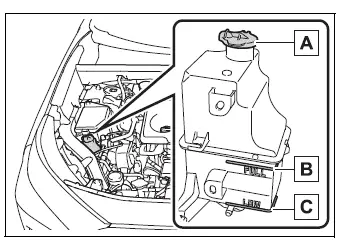
- Reservoir cap
- “FULL” line
- “LOW” line
If the coolant level is at or below the “LOW” line, add the specified coolant until the level reaches the “FULL” line. Avoid filling above the upper line.
■ Coolant selection
Use only “Toyota Super Long Life Coolant” or an equivalent high-quality ethylene-glycol-based coolant formulated with long-life hybrid organic acid technology. The coolant must be non-silicate, non-amine, non-nitrite, and non-borate.
U.S.A.:
“Toyota Super Long Life Coolant” is supplied as a mixture of 50% coolant and 50% deionized water. This mixture provides protection down to a minimum temperature of -31°F (-35°C).
Canada:
“Toyota Super Long Life Coolant” is supplied as a mixture of 55% coolant and 45% deionized water. This mixture provides protection down to a minimum temperature of -44°F (-42°C).
For additional information about the correct coolant for the Toyota RAV4, contact a Toyota dealer.
■ If the coolant level drops shortly after replenishing
Visually inspect the radiator, coolant hoses, engine or power control unit coolant reservoir caps, drain cock, and water pump for signs of leakage, staining, or moisture.
If no obvious leak can be found, have a Toyota dealer test the reservoir cap and inspect the cooling system for leaks. A coolant level that continues to fall should not be ignored.
WARNING
■ When the engine is hot
Do not remove the engine coolant reservoir cap while the engine or cooling system is hot.
The cooling system may remain pressurized after the engine is turned off. Removing the cap too soon can release hot coolant or steam and cause severe burns or other serious injuries.
NOTICE
■ When adding coolant
Coolant is not plain water or undiluted antifreeze. The correct mixture of antifreeze and deionized water is required to provide cooling, lubrication, freeze protection, and corrosion resistance. Read the product label carefully and use only a coolant that meets the stated requirements.
■ If coolant is spilled
Rinse spilled coolant away promptly with clean water to prevent damage to painted surfaces, resin parts, or other vehicle components.
Checking the radiator and condenser
Inspect the radiator and condenser for leaves, insects, dirt, and other foreign material that could obstruct airflow. Remove loose debris carefully without bending or damaging the cooling fins.
If the radiator or condenser is extremely dirty, appears damaged, or cannot be inspected safely, have the Toyota RAV4 examined by a Toyota dealer.
WARNING
■ When the engine is hot
Do not touch the radiator or condenser immediately after driving. These components may remain hot enough to cause serious burns.
■ When the electric cooling fan is operating
Keep your hands, clothing, and tools away from the engine compartment and electric cooling fan.
When the engine switch is in ON, the electric cooling fan may start automatically if the air-conditioning system is operating and/or the coolant temperature is high. Make sure the engine switch is off before working near the electric cooling fan or radiator grille.
Checking and adding the brake fluid Toyota RAV4 2026
■ Checking the fluid level
Inspect the brake fluid reservoir and confirm that the fluid level is between the “MAX” and “MIN” lines. Check the reservoir with the Toyota RAV4 parked on level ground so the fluid level can be read accurately.
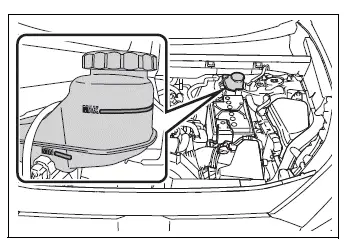
■ Adding fluid
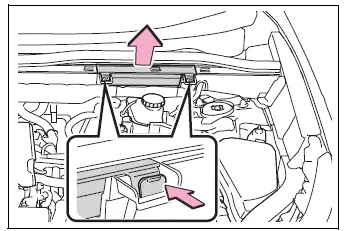
1. Slide the rubber strip in the direction shown, then lift it carefully to partially remove it and gain access to the service cover.
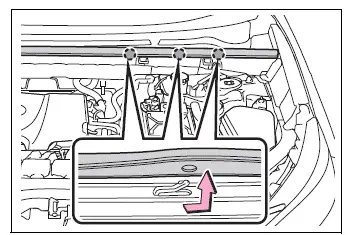
2. Release the retaining claws without applying excessive force, then remove the service cover.
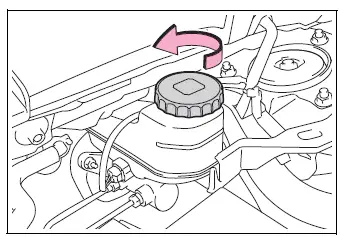
3. Remove the brake fluid reservoir cap carefully, keeping dirt and other contaminants away from the open reservoir.
4. Add brake fluid slowly while watching the level in the reservoir. Stop when the fluid reaches the correct range and do not fill above the “MAX” line.
Before adding fluid, verify that the correct brake fluid type is available and prepare the necessary clean item. Using contaminated or unsuitable fluid can adversely affect braking performance.
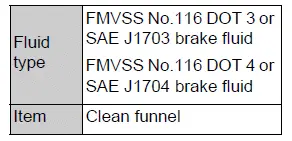
■ Brake fluid can absorb moisture from the air
Brake fluid absorbs moisture when exposed to the atmosphere. Excessive moisture can lower braking efficiency and affect the dependable operation of the brake system. Use brake fluid only from a newly opened, properly sealed container, and close the reservoir promptly after filling.
WARNING
■ When filling the reservoir
Handle brake fluid with care. It can irritate or injure your hands and eyes and can damage painted vehicle surfaces.
If brake fluid contacts your skin or enters your eyes, immediately flush the affected area with plenty of clean water.
If pain, irritation, or discomfort continues after rinsing, obtain medical attention.
NOTICE
■ If the fluid level is low or high
A slight reduction in the brake fluid level can occur as the brake pads wear. The indicated level may also vary when the fluid level in the accumulator is high.
If the reservoir requires frequent refilling, or if the level changes significantly over a short period, the brake system may have a serious problem. Have the Toyota RAV4 inspected by a Toyota dealer.
Checking the battery Toyota RAV4 (XA50)
Inspect the battery using the following procedure and observe all safety precautions whenever working near it.
■ Battery exterior
Check that the battery terminals are free from corrosion and securely connected. Inspect the battery case for cracks or other visible damage, and make sure the hold-down clamp is tight and correctly positioned.
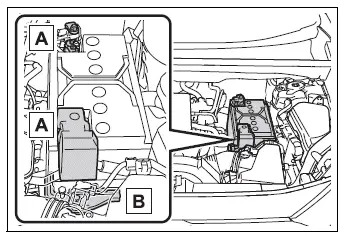
- Terminals
- Hold-down clamp
■ Before recharging
A battery produces flammable and potentially explosive hydrogen gas while it is being recharged. Complete the following preparations before connecting a charger:
- If the battery will be charged while installed in the vehicle, disconnect the ground cable before beginning the charging procedure.
- Confirm that the charger power switch is off before connecting its cables to the battery and before disconnecting them after charging.
■ After recharging/reconnecting the battery (vehicles with smart key system)
- The smart key system may not unlock the doors immediately after the battery has been reconnected. If this occurs, use the wireless remote control or mechanical key to lock or unlock the doors.
- Attempt to start the engine with the engine switch in ACC. The engine may not start if the engine switch is initially off, but it should operate normally from the second starting attempt.
- The vehicle records the selected engine switch mode. After the battery is disconnected and reconnected, the Toyota RAV4 restores the engine switch to the mode that was active before disconnection. Turn the engine switch off before disconnecting the battery. If the previous switch mode is unknown, use additional care when reconnecting the battery.
If the engine does not start after several attempts, stop trying to start it and contact a Toyota dealer for assistance.
WARNING
■ Chemicals in the battery
The battery contains poisonous and corrosive sulfuric acid and can produce flammable and explosive hydrogen gas. To reduce the risk of death or serious injury, follow these precautions whenever working on or near the battery:
- Do not allow tools or other metal objects to contact the battery terminals in a way that could create a spark or short circuit.
- Do not smoke, light a match, or bring any open flame close to the battery.
- Prevent battery electrolyte from contacting your eyes, skin, or clothing.
- Never inhale battery fumes deliberately or swallow electrolyte.
- Wear suitable protective safety glasses whenever working near the battery.
- Keep children and unauthorized persons away from the battery and the work area.
■ Where to safely charge the battery
Charge the battery only in an open or thoroughly ventilated location. Never perform charging inside a closed garage, room, or other confined space where hydrogen gas could accumulate.
■ Emergency measures regarding electrolyte
- If electrolyte gets in your eyes
Immediately flush your eyes continuously with clean water for at least 15 minutes and obtain emergency medical attention. If possible, continue applying water with a clean sponge or cloth while traveling to the nearest medical facility. - If electrolyte gets on your skin
Wash the affected area thoroughly with plenty of clean water.If pain, irritation, or a burning sensation develops or continues, obtain medical attention immediately.
- If electrolyte gets on your clothes
Electrolyte can soak through fabric and reach the skin. Remove the contaminated clothing immediately and rinse any affected skin using the procedure described above. - If you accidentally swallow electrolyte
Drink a large quantity of water or milk and obtain emergency medical attention immediately.
■ When there is insufficient battery fluid
Do not use or recharge a battery that contains an insufficient amount of fluid. Operating or charging it in this condition may create a risk of battery failure or explosion.
NOTICE
■ When recharging the battery
Never recharge the battery while the engine is running. Before connecting the charger, switch off the engine and make sure all lights, electrical accessories, and other power-consuming equipment are turned off.
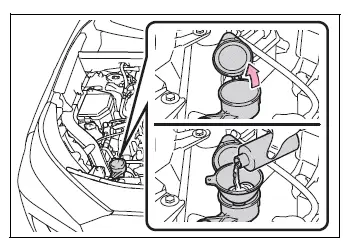
Adding the washer fluid Toyota RAV4 (XA50)
If a windshield washer does not operate or a washer-fluid warning message appears on the multi-information display, the washer fluid tank may be empty or the fluid level may be too low for normal operation.
Add the specified washer fluid to the reservoir and confirm that the washer system operates correctly afterward.
WARNING
■ When adding washer fluid
Do not add washer fluid while the engine is running or still hot. Washer fluid contains alcohol and may ignite if it is spilled onto the engine or another heated component.
NOTICE
■ Do not use any fluid other than washer fluid
Do not substitute soapy water, engine coolant, or antifreeze for the specified washer fluid.
Using an unsuitable liquid may leave streaks or marks on painted surfaces and glass. It may also damage the washer pump, obstruct the washer system, or prevent fluid from spraying correctly.
■ Diluting washer fluid
Dilute concentrated washer fluid with water when required by the product instructions and expected operating temperature.
Refer to the freezing-temperature information printed on the washer fluid container and prepare the mixture accordingly. An unsuitable concentration may freeze in cold weather or provide inadequate cleaning performance.