
Toyota RAV4: For safety and security - Child safety
Riding with children Toyota RAV4 hybrid
Observe the following precautions whenever children are traveling in the vehicle.
Use a child restraint system suitable for the child's size and development until the child is large enough to wear the vehicle's seat belt correctly.
- Children should preferably travel in the rear seats. This helps prevent accidental contact with the shift lever, wiper switch, and other controls located near the driver and front passenger.
- Use the rear door child-protector locks and the window lock switch to prevent children from opening a door while the Toyota RAV4 is moving or operating a power window unintentionally.
- Do not allow small children to operate equipment that could trap or pinch fingers, hands, or other parts of the body, including the power windows, hood, back door, and adjustable seats.
WARNING
■ When children are in the vehicle
Never leave children unattended inside the vehicle, even for a short time, and never allow them to possess, handle, or use the vehicle key.
Children may be able to start the vehicle, release the parking controls, or shift the transmission into neutral. They may also injure themselves by operating the side windows, moon roof, if equipped, panoramic moon roof, if equipped, back door, seats, or other vehicle features. In addition, temperatures inside a parked vehicle can rise or fall rapidly, and extreme heat or cold may be fatal to children.
Child restraint systems Toyota RAV4 fifth generation
Before installing a child restraint system in the Toyota RAV4, review the precautions, available restraint types, and approved installation methods described in this manual.
Use an appropriate child restraint system whenever a small child is unable to wear the vehicle's seat belt correctly. For the child's safety, install the restraint on a rear seat whenever possible.
Always follow the installation procedure and safety instructions provided in the operating manual supplied by the child restraint system manufacturer.
Table of contents
Child restraint system installation methods include the following:
- Securing the child restraint system with a seat belt
- Securing the child restraint system to the LATCH anchors
- Using an anchor bracket for the top tether strap
Points to remember
The laws of all 50 U.S. states and Canada require the use of child restraint systems. Requirements may vary according to the child's age, size, and local regulations.
- Give priority to all safety warnings and comply with the applicable laws and regulations concerning child restraint systems.
- Continue using an appropriate child restraint system until the child is large enough to wear the Toyota RAV4 seat belt correctly.
- Select a child restraint system that is compatible with the vehicle and suitable for the child's age, size, and weight.
WARNING
■ When a child is riding
Observe the following precautions whenever a child is traveling in the vehicle.
Failure to follow these precautions may result in death or serious injury.
- For effective protection during a collision, sudden stop, or abrupt steering maneuver, every child must be secured with a correctly worn seat belt or a properly installed child restraint system. Refer to the instructions supplied with the restraint for detailed installation guidance. General installation information is also provided in this manual.
- Toyota strongly recommends using a child restraint system appropriate for the child's weight and size and installing it on a rear seat of the Toyota RAV4. Accident statistics indicate that a child is safer when properly restrained in a rear seating position than in the front passenger seat.
- Holding a child in your arms or allowing another occupant to hold the child is not an acceptable substitute for a child restraint system.
During a collision, the child may be thrown against the windshield, crushed between the person holding them and the vehicle interior, or otherwise seriously injured.
■ Handling the child restraint system
If a child restraint system is not installed and secured correctly, the child or other occupants may be seriously injured or killed during sudden braking, abrupt steering, or a collision.
- If the Toyota RAV4 has been involved in a severe collision or subjected to another strong impact, the child restraint system may have internal damage that is not immediately visible. Do not reuse the restraint after such an event.
- Follow every installation instruction provided by the child restraint system manufacturer and confirm that the restraint is firmly secured before placing a child in it.
- Keep the child restraint system properly secured to the seat even when it is not being used. Never leave an unsecured restraint loose inside the passenger compartment, as it may move during sudden braking or a collision.
- If the child restraint system must be removed, take it out of the vehicle or store it securely in the luggage compartment so that it cannot shift or strike an occupant.
Child restraint system
■ Types of child restraint system installation methods
Refer to the operating manual supplied with the child restraint system for detailed installation instructions. Confirm that the selected restraint is compatible with the Toyota RAV4 and follow the manufacturer's procedure exactly when securing it to the vehicle.
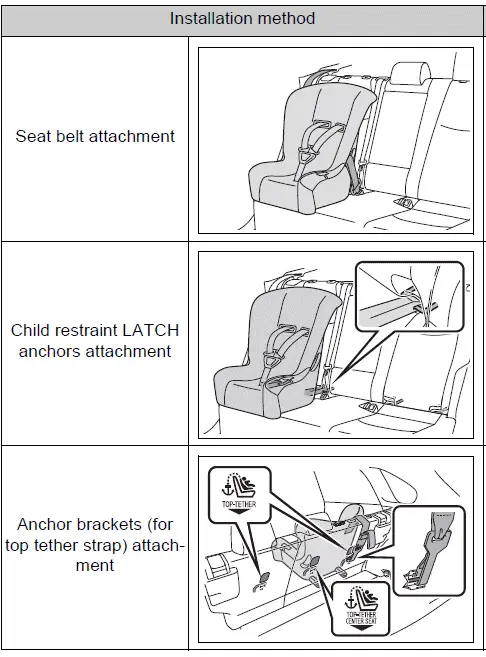
When using a child restraint system
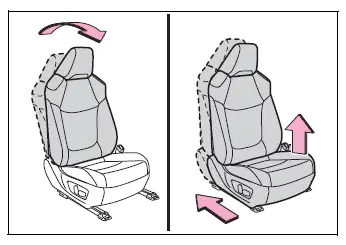
■ When installing a child restraint system to a front passenger seat
For the child's safety, install the child restraint system on a rear seat whenever possible. If installing a child restraint system on the front passenger seat is unavoidable, prepare the seat as described below before securing the restraint.
- Adjust the front passenger seatback to its most upright position so that the child restraint system can rest securely against it.
- Move the front passenger seat fully rearward to maximize the distance between the child restraint system and the front passenger airbag.
If the height of the passenger seat can be adjusted, raise it to the uppermost position.
- If the head restraint interferes with correct installation and can be removed, remove it before securing the child restraint system.
If the head restraint cannot be removed, raise it to the uppermost position so that it does not prevent the restraint from sitting correctly against the seatback.
WARNING
■ When using a child restraint system
Observe the following precautions whenever a child restraint system is installed in the vehicle.
Failure to follow these precautions may result in death or serious injury.
-
Never install a rear-facing child restraint system on the front passenger seat, even when the "AIR BAG OFF" indicator light is illuminated.
During a collision, the front passenger airbag may inflate rapidly and strike the rear-facing restraint with considerable force, causing death or serious injury to the child.
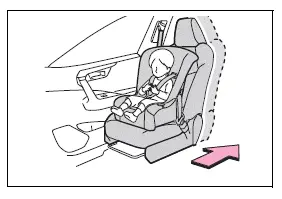
- Install a forward-facing child restraint system on the front passenger seat only when using a rear seating position is unavoidable. Do not use a child restraint system that requires a top tether strap in the front passenger seat, because this seating position does not have a top tether anchor.
-
If a forward-facing child restraint system must be installed on the front passenger seat, place the seatback in its most upright position and move the seat fully rearward before installation. Follow these precautions even if the "AIR BAG OFF" indicator light is illuminated, and make sure the restraint is secured firmly before placing the child inside.
If the head restraint interferes with correct child restraint system installation and can be removed, take it out before securing the restraint. Store the removed head restraint safely so that it cannot move around inside the Toyota RAV4.
- Do not allow the child to rest their head, arms, or any other part of the body against the door, seat side, front or rear pillars, or roof side rails where the SRS side airbags or SRS curtain shield airbags may deploy, even when the child is correctly seated in a child restraint system.
If a side or curtain shield airbag inflates, the force of deployment could strike the child and cause death or serious injury.
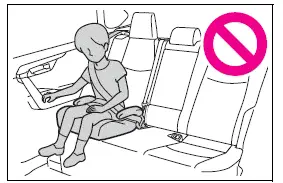
- When using a booster seat, always confirm that the shoulder belt passes across the center of the child's shoulder. Keep the belt away from the child's neck while making sure it cannot slip off the shoulder.
- Select a child restraint system appropriate for the child's age, size, and weight, and install it securely on a rear seat of the Toyota RAV4.
- If the driver's seat interferes with the child restraint system and prevents it from being installed correctly, secure the child restraint system in the right-hand rear seating position instead.
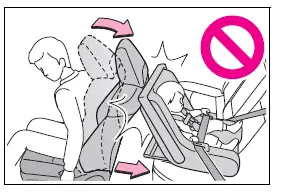
- Adjust the front passenger seat so that the seatback, seat cushion, and head restraint do not press against or interfere with the child restraint system. After adjustment, confirm that the restraint remains firmly secured.
Child restraint system fixed with a seat belt Toyota RAV4
A child restraint system intended for a small child or infant must be secured firmly to the vehicle seat using the lap portion of the lap/shoulder belt. Correct installation is essential to prevent the restraint from shifting during sudden braking, abrupt steering, or a collision.
■ Installing child restraint system using a seat belt (child restraint lock function belt)
Install the child restraint system according to the operating manual supplied by its manufacturer. Follow the specified belt routing carefully and confirm that the restraint is compatible with the selected seating position in the Toyota RAV4.
■ Rear-facing - Infant seat/convertible seat
1. Adjust the rear seat to provide a stable installation surface.
If there is a gap between the child restraint system and the seatback, adjust the rear seatback angle until the restraint makes firm and even contact with it.
2. Place the child restraint system on the rear seat so that it faces the rear of the Toyota RAV4. Center the restraint on the seating position before routing the seat belt.
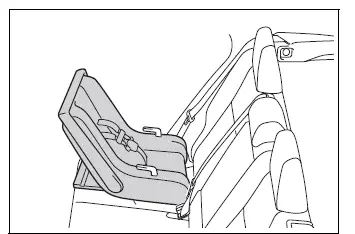
3. Route the seat belt through the child restraint system according to the manufacturer's instructions, and insert the latch plate into the buckle until it locks. Make sure the belt webbing lies flat and is not twisted.
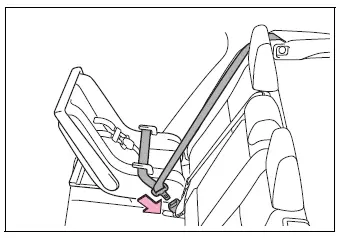
4. Pull the shoulder belt out completely, and then allow it to retract slightly to engage the child restraint locking mode. Once this mode is active, the belt cannot be extended again until it is fully retracted.
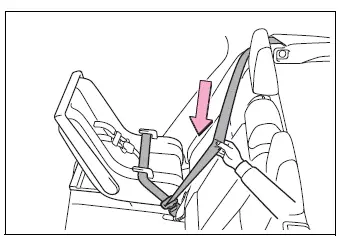
5. Press the child restraint system firmly downward and into the rear seat while allowing the shoulder belt to retract. Continue removing slack until the restraint is held securely against the seat.
After the shoulder belt has retracted and no visible slack remains, pull firmly on the belt to confirm that it is locked and cannot be extended.
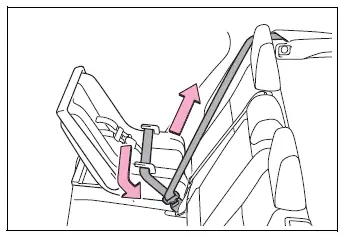
6. After completing the installation, hold the child restraint near the belt path and move it from side to side and forward and backward. Confirm that it remains firmly secured before placing the child in the restraint.
■ Forward-facing - Convertible seat
1. Adjust the selected vehicle seat before installing the forward-facing child restraint system.
When using the front passenger seat: If installation on the front passenger seat is unavoidable, refer to P.53 and adjust the seat exactly as specified before securing the child restraint.
When using a rear seat: If a gap remains between the child restraint system and the seatback, adjust the rear seatback angle until the restraint makes stable contact with the seat.
2. If the head restraint interferes with proper installation and can be removed, remove it before placing the child restraint system on the seat. Store the removed head restraint securely inside the Toyota RAV4 so that it cannot move during driving.
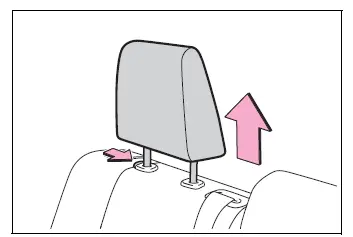
3. Place the child restraint system on the selected seat so that it faces the front of the vehicle. Position it evenly against the seatback and confirm that it does not tilt or rest on nearby trim.
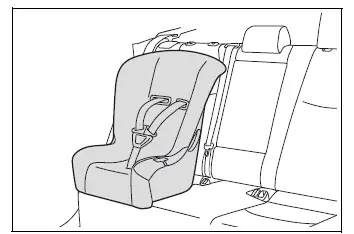
4. Route the seat belt through the designated belt path in the child restraint system and insert the latch plate into the buckle until a click is heard. Confirm that the belt is not twisted and follows the routing shown in the restraint manufacturer's instructions.
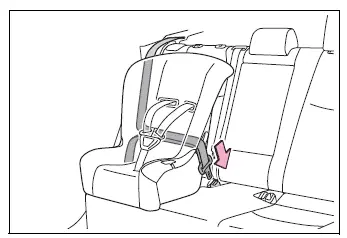
5. Pull the shoulder belt out completely, and then allow it to retract slightly to activate the child restraint locking mode. Once this mode is engaged, the belt cannot be extended again until it has been fully retracted.
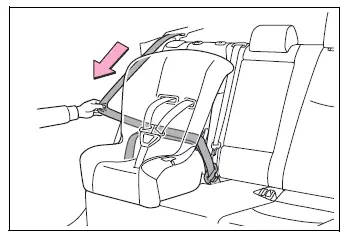
6. Press the child restraint system firmly into the rear seat while allowing the shoulder belt to retract. Continue removing slack until the restraint is held securely against the seatback and seat cushion.
After the shoulder belt has retracted and no loose webbing remains, pull firmly on the belt to confirm that the locking function is engaged and that the belt cannot be extended.
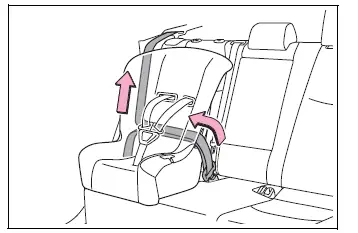
7. If the child restraint system is equipped with a top tether strap, follow the manufacturer's operating instructions and attach the strap securely to the appropriate top tether anchor in the Toyota RAV4. Make sure the strap is routed and tightened exactly as specified.
8. After installation, hold the child restraint system near the belt path and move it forward, backward, and from side to side. Confirm that it remains firmly secured before placing the child in the restraint.
■ Booster seat
1. If installing the booster seat on the front passenger seat is unavoidable, refer to P.53 and complete all specified front passenger seat adjustments before positioning the restraint.
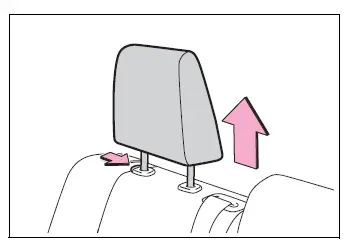
2. High back type: If the head restraint interferes with correct installation and can be removed, remove it before placing the high back booster seat on the vehicle seat. Store the removed head restraint securely so that it cannot move inside the cabin.
3. Place the child restraint system on the selected seat so that it faces the front of the vehicle. Make sure the base rests evenly on the seat cushion and the restraint is positioned according to the manufacturer's instructions.
Booster type
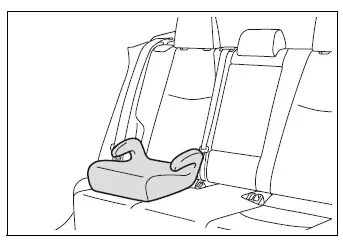
High back type
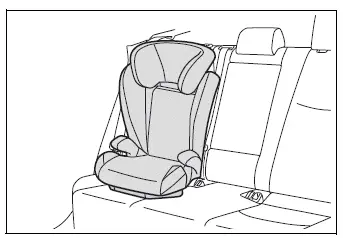
4. Seat the child correctly in the child restraint system. Route the seat belt through or around the restraint according to the manufacturer's instructions, and insert the latch plate into the buckle until it clicks. Make sure the belt webbing is not twisted, folded, or caught.
Confirm that the shoulder belt passes across the center of the child's shoulder without touching the neck or slipping off the shoulder. Position the lap belt as low and snug as possible across the child's hips.
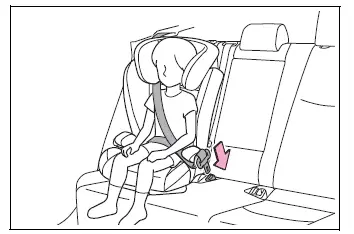
■ Removing a child restraint system installed with a seat belt
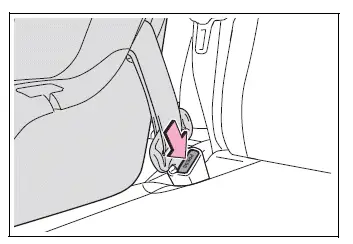
Press the seat belt buckle release button and allow the belt to retract fully. Complete the removal carefully so that the latch plate does not strike the child restraint or nearby Toyota RAV4 interior trim.
When the buckle is released, the child restraint system may rise suddenly because of pressure from the compressed seat cushion. Hold the restraint firmly in place while releasing the buckle to keep it under control.
Because the seat belt retracts automatically, guide the belt and latch plate slowly back to the normal stowed position. Confirm that the belt is fully retracted and is not twisted or trapped.
WARNING
■ When installing a child restraint system
Observe all of the following precautions whenever a child restraint system is installed in the Toyota RAV4.
Failure to follow these instructions may prevent the restraint or seat belt from operating correctly and could result in death or serious injury.
- Do not allow children to play with a seat belt. If the belt becomes wrapped or twisted around a child's neck, it may cause choking or another life-threatening injury.
If this occurs and the buckle cannot be released immediately, use scissors to cut the belt while taking care not to injure the child.
- Make sure the seat belt latch plate is fully inserted and securely locked in the buckle. Confirm that the belt webbing lies flat and is not twisted, folded, or trapped.
- After installation, hold the child restraint near its belt path and move it from side to side and forward and backward. Confirm that it remains firmly secured and does not shift excessively.
- Once the child restraint system has been secured, do not adjust the vehicle seat or seatback. Moving the seat afterward may loosen the installation or change the intended restraint position.
- When using a booster seat, make sure the shoulder belt passes across the center of the child's shoulder. Keep the belt away from the neck while ensuring that it cannot slip off the shoulder.
- Follow every installation, positioning, and usage instruction provided by the child restraint system manufacturer. Use only the belt paths and attachment points specified for that restraint.
- When certain child restraint systems are installed in a rear seat, the restraint may interfere with the seat belts at adjacent seating positions or prevent those belts from fitting correctly.
Before another passenger uses a nearby seat, confirm that the shoulder belt fits securely across the center of the shoulder and that the lap belt rests low and snug across the hips. If the belt does not fit properly or contacts the child restraint system, move the passenger to another seating position in the Toyota RAV4. Failure to do so may result in death or serious injury.
- When installing a child restraint system in the center rear seat, adjust both rear seatbacks to the same angle. If the seatbacks are positioned differently, the restraint may not sit evenly or remain securely fixed during sudden braking, abrupt steering, or a collision.
■ When installing a booster seat
Do not pull the shoulder belt out completely when securing a child in a booster seat, as this may activate the automatic locking retractor (ALR) mode. In ALR mode, the belt retracts and tightens but cannot be extended again, which may cause discomfort or injury to the child. Route and fasten the belt normally while maintaining the correct shoulder and lap belt positions.
■ Do not use a seat belt extender
Never use a seat belt extender when installing or securing a child restraint system. The extender may prevent the seat belt from holding the restraint firmly and can reduce its effectiveness during sudden braking, abrupt steering, or a collision. This could result in death or serious injury to the child or other occupants.
Child restraint system fixed with a child restraint LATCH anchor Toyota RAV4 fifth generation
■ Child restraint LATCH anchors
LATCH anchors are provided for the outboard rear seating positions of the Toyota RAV4. These anchors allow a compatible child restraint system to be attached directly to the vehicle without using the seat belt for the lower connection.
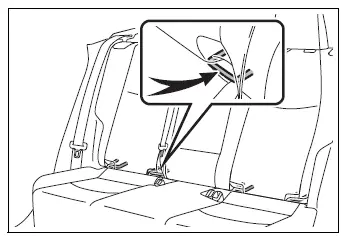
■ When installing in the rear outboard seats
Install the child restraint system according to the operating manual supplied by its manufacturer. Confirm that the restraint is compatible with the LATCH anchors and the selected seating position before beginning installation.
1. Adjust the rear seat to provide a stable surface for the child restraint system.
If there is a gap between the child restraint system and the seatback, adjust the seatback angle until the restraint makes firm and even contact with it.
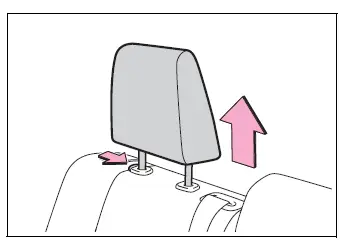
2. If the head restraint interferes with correct installation and can be removed, remove it before positioning the child restraint system. Store the removed head restraint securely so that it cannot move inside the Toyota RAV4.
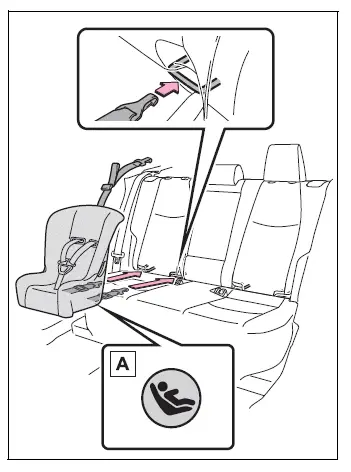
With flexible lower attachments
3. Connect the hooks of the flexible lower attachments securely to the LATCH anchors. Make sure each hook is fully engaged and that the attachment straps are not twisted.
For owners in Canada: Symbol A on a child restraint system indicates that the restraint is equipped with a lower connector system.
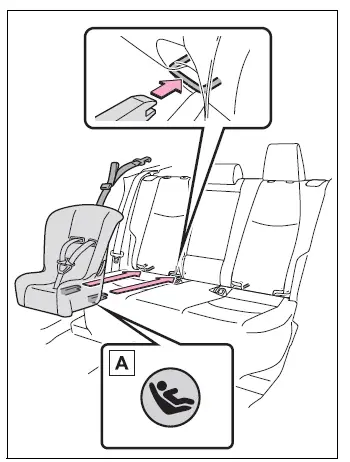
With rigid lower attachments
3. Align the rigid lower connectors with the LATCH anchors and push the child restraint into position until the connectors lock securely onto the anchors.
For owners in Canada: Symbol A on a child restraint system indicates that the restraint is equipped with a lower connector system.
4. If the child restraint system has a top tether strap, follow the manufacturer's operating instructions and attach the strap to the appropriate top tether anchor. Route and tighten the strap exactly as specified.
5. After installation, hold the child restraint near the lower attachment points and move it forward, backward, and from side to side. Confirm that it remains firmly secured before placing the child in the restraint.
■ When installing in the rear center seat
There are no dedicated LATCH anchors directly behind the rear center seating position.
However, the inboard LATCH anchors for the two outboard seats are spaced 17.3 in. (440 mm) apart and may be used for a center-seat installation only when the child restraint system manufacturer's instructions specifically permit installation with that anchor spacing.
Child restraint systems equipped with rigid lower attachments cannot be installed in the center rear seat. This type of restraint can only be installed in one of the outboard rear seating positions.
■ Laws and regulations pertaining to anchors
The LATCH system conforms to FMVSS 225 or CMVSS 210.2.
Child restraint systems that comply with FMVSS 213 or CMVSS 213 specifications can be used.
The Toyota RAV4 is designed to conform to SAE J1819.
WARNING
■ When installing a child restraint system
Observe all of the following precautions during installation and use.
Failure to follow these instructions may prevent the child restraint system from operating correctly and could result in death or serious injury.
- Before connecting a child restraint to the LATCH anchors, make sure there are no foreign objects, debris, or loose materials around the anchors. Also confirm that the vehicle seat belt is not trapped behind or underneath the child restraint system.
- Follow every installation, routing, tightening, and usage instruction provided by the child restraint system manufacturer.
- Never connect two child restraint attachments to the same LATCH anchor. During a collision, a single anchor may not be able to support two restraints and could fail.
If the outboard LATCH anchors are already being used, install a compatible child restraint system in the center rear seat using the seat belt instead.
- When some types of child restraint systems are installed in the rear seats, the restraint may interfere with the seat belts at adjacent seating positions or prevent those belts from fitting correctly.
Before another passenger uses a nearby seat, make sure the shoulder belt fits snugly across the center of the shoulder and the lap belt rests low across the hips. If the belt does not fit correctly or contacts the child restraint system, move the passenger to another seating position. Failure to do so may result in death or serious injury.
- If the vehicle seat or seatback is adjusted after installation, check the child restraint system again and confirm that all lower attachments remain securely connected and properly tightened.
Using an anchor bracket (for top tether strap)
■ Anchor brackets (for top tether strap)
Anchor brackets are provided for each rear seating position in the Toyota RAV4.
Use the appropriate anchor bracket whenever a child restraint system requires a top tether strap. The tether helps limit forward movement of the upper part of the restraint.
Outboard rear seats
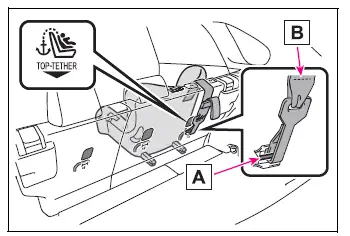
- Anchor brackets
- Top tether strap
Center rear seat
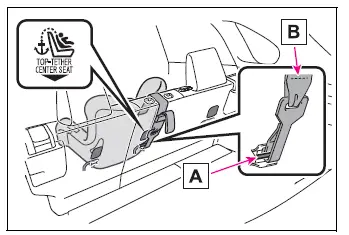
- Anchor bracket
- Top tether strap
■ Fixing the top tether strap to the anchor bracket
Install the child restraint system according to the operating manual supplied by the manufacturer. Confirm that the restraint is already secured correctly before attaching and tightening the top tether strap.
Outboard rear seats
1. Remove the head restraint when necessary to provide the correct top tether strap routing and allow the child restraint to sit firmly against the seatback.
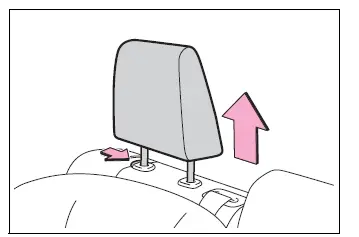
2. Attach the top tether hook to the designated anchor bracket and tighten the strap according to the child restraint manufacturer's instructions.
Pull the strap firmly and confirm that the hook is fully engaged with the anchor bracket and that the tether is not loose or twisted.
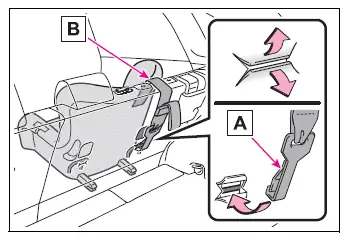
- Hook
- Top tether strap
3. If the head restraint does not interfere with the child restraint system or the top tether strap, reinstall it in the correct position and make sure it locks securely.
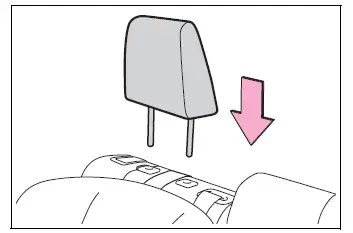
Center rear seat
1. Raise the center rear head restraint to its uppermost position.
If the head restraint interferes with the child restraint system and can be removed, remove it before completing the installation and store it securely.
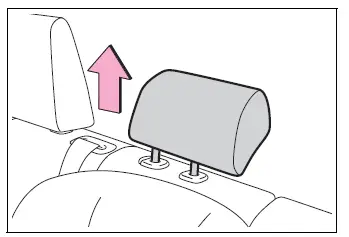
2. Connect the top tether hook to the center anchor bracket and tighten the strap according to the child restraint manufacturer's instructions.
Confirm that the top tether strap is firmly secured, correctly tensioned, and free from twists.
When the child restraint system is installed with the head restraint raised, route the top tether strap underneath the head restraint as shown.
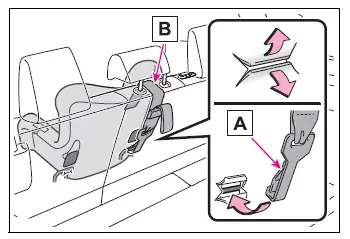
- Hook
- Top tether strap
■ Laws and regulations pertaining to anchors
The LATCH system conforms to FMVSS 225 or CMVSS 210.2.
Child restraint systems that comply with FMVSS 213 or CMVSS 213 specifications can be used.
This vehicle is designed to conform to SAE J1819.
WARNING
■ When installing a child restraint system
Observe all of the following precautions when securing a child restraint system with a top tether strap.
Failure to follow these instructions may result in death or serious injury.
- Attach the top tether strap firmly to the correct anchor bracket and make sure the strap is properly tightened without twists, folds, or obstructions.
- Do not connect the top tether strap to a luggage hook, seat component, or any point other than the designated anchor bracket.
- After the child restraint system has been secured, do not adjust the vehicle seat or seatback, as this may loosen the lower attachments or top tether strap.
- Follow all installation and tightening instructions provided by the child restraint system manufacturer.
- Center rear seat: When installing the child restraint system with the head restraint raised, do not lower the head restraint after the tether hook has been attached and the strap has been tightened.