Toyota RAV4: Maintenance and care - Cleaning and protecting the vehicle exterior
Follow these cleaning and care procedures to protect the Toyota RAV4 exterior and help maintain its appearance in excellent condition:
Cleaning instructions
- Beginning at the top and working downward, apply plenty of clean water to the vehicle body, wheel wells, and underside of the Toyota RAV4. This helps loosen and remove accumulated dirt, dust, road residue, and other surface contaminants before washing.
- Wash the vehicle body gently with a clean sponge or soft cloth, such as a chamois. Rinse the cleaning material regularly so that trapped dirt does not scratch the painted surfaces.
- For marks that cannot be removed with water alone, use an appropriate car wash soap and rinse the treated area thoroughly with clean water so that no detergent remains on the surface.
- After rinsing, wipe away the remaining water with a clean, soft cloth to reduce water spots and streaks.
- Apply wax when the water-repellent coating begins to deteriorate. Regular waxing helps protect the paint and preserve the exterior finish.
If water no longer forms beads on a clean painted surface, apply a suitable automotive wax while the vehicle body is cool. Avoid waxing panels that are hot from direct sunlight or recent driving.
■ Automatic car washes
- Before placing the vehicle in an automatic car wash:
- Fold the outside rearview mirrors.
- Turn off the power back door, if equipped, to prevent unintended operation during washing.
Enter the automatic car wash with the front of the vehicle facing forward. After washing is complete, return the outside rearview mirrors to their normal driving position before operating the Toyota RAV4.
- Brushes used in some automatic car washes may scratch painted surfaces or damage exterior parts, including the wheels and wheel ornaments. Consider the wash equipment and condition of its brushes before use.
- The rear spoiler may not be suitable for certain automatic car washes.
Depending on the design of the washing equipment, there may also be an increased risk of damage to the spoiler or surrounding exterior components.
■ High-pressure car washes
Because pressurized water may enter the cabin, do not position the nozzle close to gaps around the doors, weather seals, or the perimeter of the windows. Do not spray these areas continuously, and maintain sufficient distance between the nozzle and the vehicle surface.
■ Note for the smart key system (if equipped)
If a door handle becomes wet while the electronic key is within its effective operating range, the doors may repeatedly lock and unlock. When washing a Toyota RAV4 equipped with the smart key system, use one of the following procedures:
- Keep the electronic key at least 6 ft. (2 m) away from the vehicle while it is being washed. Store the key in a secure location and take appropriate precautions to prevent loss or theft.
- Place the electronic key in battery-saving mode to temporarily disable smart key system communication during washing.
■ Wheels and wheel ornaments (vehicles without matte-painted wheels)
- Remove dirt and road residue promptly with a neutral detergent before it becomes difficult to clean.
- Rinse the detergent away thoroughly with clean water immediately after use.
- To protect the wheel finish from staining, discoloration, or other damage, observe the following precautions:
- Do not use acidic, alkaline, or abrasive detergents.
- Do not clean the wheels with hard or stiff-bristled brushes.
- Do not apply detergent while the wheels are hot, such as immediately after driving or after the vehicle has been parked in hot weather. Allow the wheels to cool before cleaning them.
■ Wheels and wheel ornaments (vehicles with matte-painted wheels)
Matte-painted wheels and wheel ornaments require different cleaning methods from conventional painted or polished wheels. Improper products or cleaning techniques may alter the finish and create glossy or uneven areas.
Contact your Toyota dealer for additional information about approved care procedures and suitable cleaning products.
- Remove dirt with clean water as soon as reasonably possible.
If the wheels are heavily soiled and water alone is not sufficient, use a properly diluted neutral detergent.
- Whenever detergent is used, rinse it off immediately and completely with clean water.
After rinsing, gently remove the remaining water with a clean, soft cloth.
- Clean the wheels by hand with a soft sponge or cloth, using light pressure to avoid changing the matte finish.
- To prevent the matte paint from being damaged, polished, discolored, or made glossy, observe all of the following precautions:
- Do not apply wax, protective coatings, polishing compounds, or similar surface treatments.
- Do not use acidic, alkaline, or abrasive cleaning products.
- When applying tire cleaner or tire wax, make sure that the product does not contact the wheels or wheel ornaments.
- Do not scrub, buff, or polish the wheels with a brush, dry cloth, or other abrasive material.
- When using an automatic car wash, do not select a program that activates wheel-cleaning brushes.
- Do not clean matte-painted wheels with a high-pressure washer or steam cleaner.
- Do not apply detergent while the wheels are hot after driving or after the vehicle has been parked in high ambient temperatures. Wait until the wheels have cooled.
■ Brake pads and calipers
Rust may develop when the Toyota RAV4 is parked while the brake pads or disc rotors are still wet, and the components may temporarily stick together. After washing the vehicle, drive slowly in a safe area and apply the brakes several times with light pressure before parking. This helps dry the braking surfaces and reduces the possibility of corrosion or sticking.
■ Bumpers
Do not scrub the bumpers with abrasive cleaners, rough pads, or other materials that could scratch or damage the surface finish.
■ Plated portions
If ordinary washing does not remove dirt from plated exterior parts, clean them using the following procedure:
- Use a soft cloth moistened with an approximately 5% solution of neutral detergent and water, then gently wipe away the dirt without applying excessive pressure.
- Wipe the cleaned surface with a dry, soft cloth to remove all remaining moisture and reduce the chance of water marks.
- For oily deposits that remain on the surface, use an alcohol-based wet wipe or a similar suitable cleaning product.
WARNING
■ When washing the vehicle
Do not spray or pour water into the engine compartment. Water entering electrical components, wiring, or related equipment may cause a short circuit, malfunction, or fire.
■ When cleaning the windshield (vehicles with rain-sensing windshield wipers)
Set the windshield wiper switch to the off position before cleaning the glass.
If the switch remains in “AUTO”, the windshield wipers may begin operating unexpectedly under any of the following conditions. Sudden wiper movement could trap hands, cause serious injury, or damage the wiper blades and surrounding components.
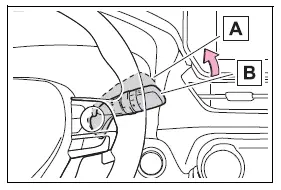
- Off position
- AUTO position
- When the upper section of the windshield near the raindrop sensor is touched by hand
- When a wet cloth, sponge, or similar object is held close to the raindrop sensor
- When an object strikes or presses against the windshield
- When the raindrop sensor body is touched directly or struck by an object
■ Precautions regarding the exhaust pipes
Hot exhaust gases cause the exhaust pipes to reach very high temperatures during and immediately after vehicle operation.
When washing the Toyota RAV4, do not touch the exhaust pipes until they have cooled sufficiently. Contact with a hot exhaust pipe may cause serious burns.
■ Precaution regarding the rear bumper
If the rear bumper paint becomes chipped, scratched, or otherwise damaged, the following driver-assistance and parking-support systems may not operate correctly.
If rear bumper damage is found, have the affected area inspected by your Toyota dealer.
- BSM, if equipped
- RCTA, if equipped
- PKSB, if equipped
- Intuitive parking assist, if equipped
NOTICE
■ To prevent paint deterioration and corrosion of the body and components, including aluminum wheels
- Wash the vehicle promptly in any of the following situations:
- After driving near the seacoast, where salt carried by the air or water may remain on exterior surfaces
- After driving on roads treated with salt or other de-icing chemicals
- When coal tar, tree sap, or similar contaminants are present on the painted surfaces
- When dead insects, insect residue, or bird droppings are present on the paint
- After driving through an area contaminated by soot, oily smoke, mining dust, iron particles, or chemical substances
- When the vehicle has become heavily covered with dust, dirt, or mud
- When liquids such as benzene or gasoline have been spilled onto a painted surface
- If the paint is chipped or scratched, arrange for the damaged area to be repaired as soon as possible. Prompt repair helps prevent moisture from reaching the underlying material and causing corrosion.
- When wheels are removed for storage, clean off dirt, road salt, and moisture before placing them in a dry, low-humidity location. Proper storage helps protect the wheel finish and reduce corrosion.
■ Cleaning the exterior lights
- Clean the exterior lights carefully using water and a soft cloth or sponge. Do not apply organic solvents or scrub the lenses with a hard brush.
Harsh chemicals, stiff bristles, or excessive pressure may scratch, discolor, or otherwise damage the light surfaces.
- Do not apply automotive wax directly to the surfaces of the exterior lights.
Wax may affect the lenses, leave an uneven residue, or damage their protective surface finish.
■ When using an automatic car wash (vehicles with rain-sensing windshield wipers)
Move the windshield wiper switch to the off position before the Toyota RAV4 enters an automatic car wash.
If the switch remains in “AUTO”, water or movement from the washing equipment may activate the wipers unexpectedly and damage the wiper blades or related components.
■ When using a high-pressure car wash
- When washing the vehicle, do not direct high-pressure water at any camera or the surrounding camera area. The force of the water may affect the camera position or components and prevent the device from operating normally.
- Do not spray high-pressure water directly at the radar installed behind the radar sensor cover.
Direct exposure to a powerful water jet may damage the radar or interfere with its proper operation.
- Do not position the nozzle close to protective boots made of rubber or resin, electrical connectors, or any of the components listed below.
These parts may be damaged, displaced, or lose their protective sealing if exposed to high-pressure water at close range.
- Traction-related components
- Steering components
- Suspension components
- Brake components
- Keep the cleaning nozzle at least 11.9 in. (30 cm) away from the Toyota RAV4 body. Holding the nozzle closer may deform or damage resin parts, including moldings and bumpers. Do not aim the water jet continuously at one location, even when the recommended distance is maintained.
- Do not continuously spray the lower section of the windshield. Water entering the air-conditioning intake located near the base of the windshield may interfere with proper operation of the climate-control system.
- Do not use a high-pressure car washer to clean the underside of the Toyota RAV4. The concentrated water stream may affect exposed components, covers, connectors, or protective materials beneath the vehicle.
■ Cleaning the exterior lights
- Wash the exterior lights gently with clean water and a soft cloth or sponge. Do not use organic solvents, abrasive cleaners, stiff brushes, or other materials that can scratch the lens surface.
Use light, even pressure during cleaning. Forceful scrubbing can leave visible marks, dull the lens, cause discoloration, or wear away the protective surface coating.
- Do not apply automotive wax directly to the exterior light lenses.
Wax can leave a cloudy film, collect around lens edges, or alter the appearance of the protective finish. If wax reaches a light surface, remove it promptly with clean water and a soft cloth.
■ When using an automatic car wash (vehicles with rain-sensing windshield wipers)
Before driving the Toyota RAV4 into an automatic car wash, move the windshield wiper switch to the off position.
When the switch is left in “AUTO”, water striking the windshield or vibration from the washing equipment can activate the wipers without warning. Contact with brushes or other moving equipment can bend the wiper arms, tear the blades, or place excessive load on the wiper mechanism.
■ When using a high-pressure car wash
- Never aim a high-pressure water jet directly at a camera or the area around its mounting point. Concentrated pressure can shift the camera from its calibrated position, loosen surrounding trim, or allow water to enter the mounting area, resulting in inaccurate or unavailable camera operation.
- Do not spray high-pressure water directly at the radar located behind the radar sensor cover.
A powerful jet striking this area can disturb the radar mounting position, damage the cover, or reduce the sensor’s ability to detect objects accurately.
- Keep the nozzle well away from rubber or resin protective boots, electrical connectors, and the vehicle parts listed below.
Close-range pressure can lift the edges of protective boots, force moisture past connector seals, dislodge clips, or wash away protective coatings from exposed surfaces.
- Traction-related components
- Steering components
- Suspension components
- Brake components
- Maintain a distance of at least 11.9 in. (30 cm) between the cleaning nozzle and the Toyota RAV4 body. A nozzle held too close can deform resin panels, loosen moldings, mark painted surfaces, or damage bumper sections. Keep the nozzle moving continuously rather than concentrating the stream on one location.
- Avoid continuously spraying the lower edge of the windshield. Water forced into the air-conditioning intake near the windshield base can restrict airflow, introduce moisture into the ventilation system, or disrupt climate-control performance.
- Do not clean the underside of the Toyota RAV4 with a high-pressure washer. The concentrated stream can loosen underbody covers, penetrate electrical connectors, strip protective coatings, or damage seals around exposed components.